



Your development vendor just delivered the new feature. It works. The button clicks, the data saves, the page loads. You sign off.
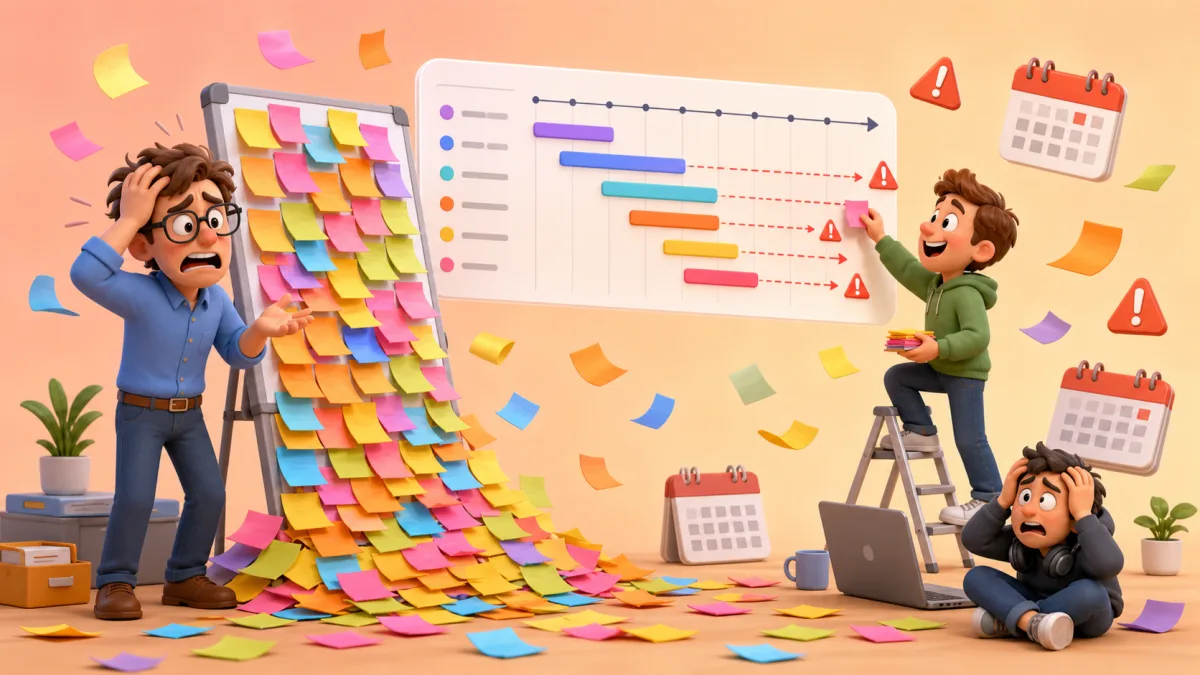
Three months later, a new feature takes four times longer than expected. A bug in one place breaks something unrelated. Your lead developer at the agency says it's "technically complex" — and you have no way to verify that.
This is the non-technical founder's blind spot. And it costs real money.
"It works" is not a quality signal. It's the minimum bar. A codebase can function perfectly on the surface while carrying years of compounding problems underneath — duplicated logic, no tests, no documentation, dependencies nobody updates, deployment processes that depend entirely on one person who might quit tomorrow.
You don't need to read code to see these problems coming. You just need to know what to look for.
The Proxy Signals That Actually Matter
Technical quality leaves traces in how a team behaves, not just what they build. Watch for these:
How do they talk about deployments?
Healthy teams deploy often and with low stress. If your vendor deploys once a month, treats each release as a risky event, or can only deploy on Fridays when "everyone is available," that's a red flag. Frequent, automated, low-drama deployments are a sign of well-structured code and solid processes underneath.
Ask: "How often do you deploy? What does that process look like?"
Do pull requests get reviewed, or just merged?
Code review is how teams catch problems before they become technical debt. Ask whether developers review each other's code before it goes to production. If the answer is "we're a small team, we just merge," you're looking at a process that skips the most important quality gate in software development.
How do they handle bugs?
Every codebase has bugs. What matters is the system around them. Does your vendor track bugs in a structured way? Do they investigate root causes, or just patch symptoms? A team that fixes the same category of bug repeatedly — login issues, payment failures, data inconsistencies — might be treating symptoms because the underlying code is too fragile to touch properly.
How do they talk about the codebase to you?
A confident, honest team can explain their architectural decisions in plain language. They'll say things like "we chose this approach because it makes X easier to change later" or "this part of the system is older and we've been meaning to refactor it." Vague answers, excessive jargon, or defensive reactions when you ask questions are signs of a team that either doesn't fully understand what they've built — or doesn't want you to.
Questions to Ask Your Vendor
You don't need technical knowledge to ask these. You need the courage to ask them and the patience to listen carefully to the answers.
"What happens if your lead developer leaves?"
The honest answer is: nothing catastrophic, because the knowledge is in the code and documentation, not in one person's head. If the answer is vague, or if there's an awkward pause, you may be more dependent on a specific individual than you realize.
"How do you document decisions?"
Good teams keep records of why they built things a certain way — architecture decision records, commented code, wikis. If your vendor can't point to where this documentation lives, you're accumulating invisible debt every day.
"Can you walk me through how a new feature gets from spec to production?"
Listen for a clear, repeatable process: discovery, planning, design, development, review, testing, staging, production. Gaps in this chain — especially around testing and review — are where quality problems enter.
"What does your test coverage look like?"
You don't need to understand what test coverage means technically. You just need to know whether they have it and whether they care about it. A team that has never been asked this question and doesn't have a ready answer hasn't been thinking about quality.
"What's the part of this codebase you're least proud of?"
Every experienced developer has an honest answer to this. A team that says "everything is great" is either not thinking critically about their work or not being straight with you.
Red Flags in the Relationship
Code quality problems often show up in relationship patterns before they surface in the software.
Everything is urgent. If your vendor treats every request as a rush job, they may be working in a codebase so tangled that simple things genuinely take long — so they compensate by rushing everything rather than explaining why tasks take time.
No pushback on requirements. A good development team asks clarifying questions and occasionally pushes back on feature requests that don't make sense or conflict with how the system is built. A team that says yes to everything may not understand the system well enough to know when to say no — or may be prioritizing short-term billing over long-term quality.
No questions before building. Solid development starts with understanding. If your vendor goes quiet after receiving a brief and resurfaces with a completed feature, they skipped the clarification that prevents misaligned work — and the kind of sloppy code that gets written when nobody stops to think.
Delays always blamed on technical complexity. Some things genuinely are complex. But "it's technically complex" as a recurring explanation for delays, without specifics, is worth probing. Ask them to explain what makes it complex. If they can't articulate it clearly, complexity may not be the real issue.
The Cost Comparison That Makes This Concrete
A proper technical audit — hiring an independent senior developer to review your codebase and write a report — typically costs $1,000 to $5,000 depending on scope and the reviewer's rate. It takes a few days to a week.
The cost of inheriting a bad codebase:
- A full rewrite of a mid-sized application: $50,000–$200,000+
- Timeline slippage caused by compounding technical debt: months
- Recruiting costs when engineers won't work in the system: real
- Business opportunities missed while the system is too fragile to extend: incalculable
A technical audit is cheap insurance. If you're three months into an engagement and something feels off, it's worth doing before you're twelve months in and too deep to pivot.
More importantly: if your vendor resists an independent audit, that's your answer.
What You Actually Control
You can't read the code. But you can ask smart questions, watch how the team behaves, insist on a process that's visible to you, and know when to bring in an independent perspective.
The non-technical founders who end up with good software aren't the ones who learned to code. They're the ones who learned to spot the difference between a team that's confident because they're doing good work and a team that's confident because you don't know enough to question them.
That distinction is worth more than any technical skill.